Traceability that survives the saw.
Heat to bar, bar to mark, mark to weld, weld to load. When the client asks where a beam came from, the answer is a click, not an afternoon in the file room.
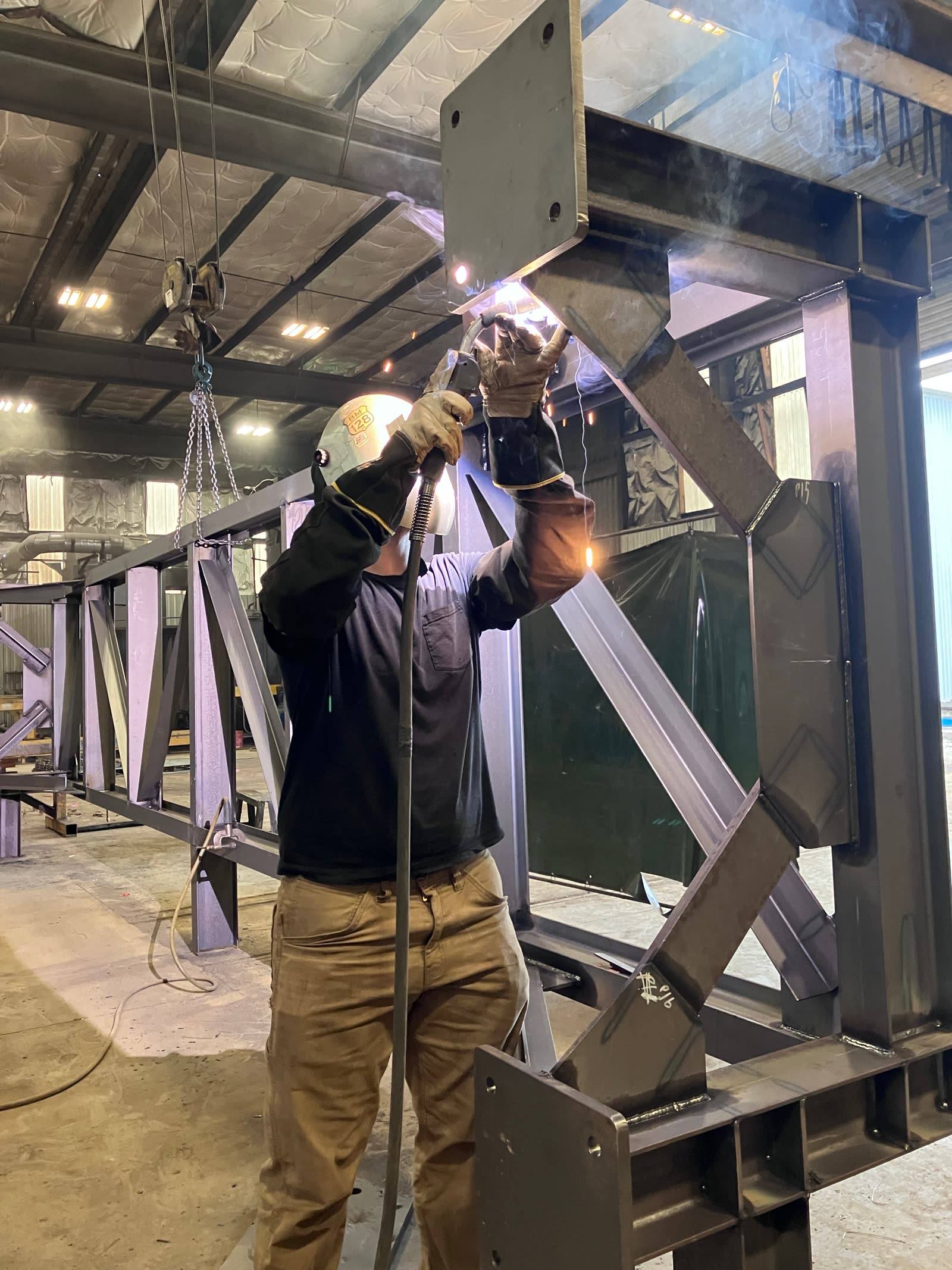
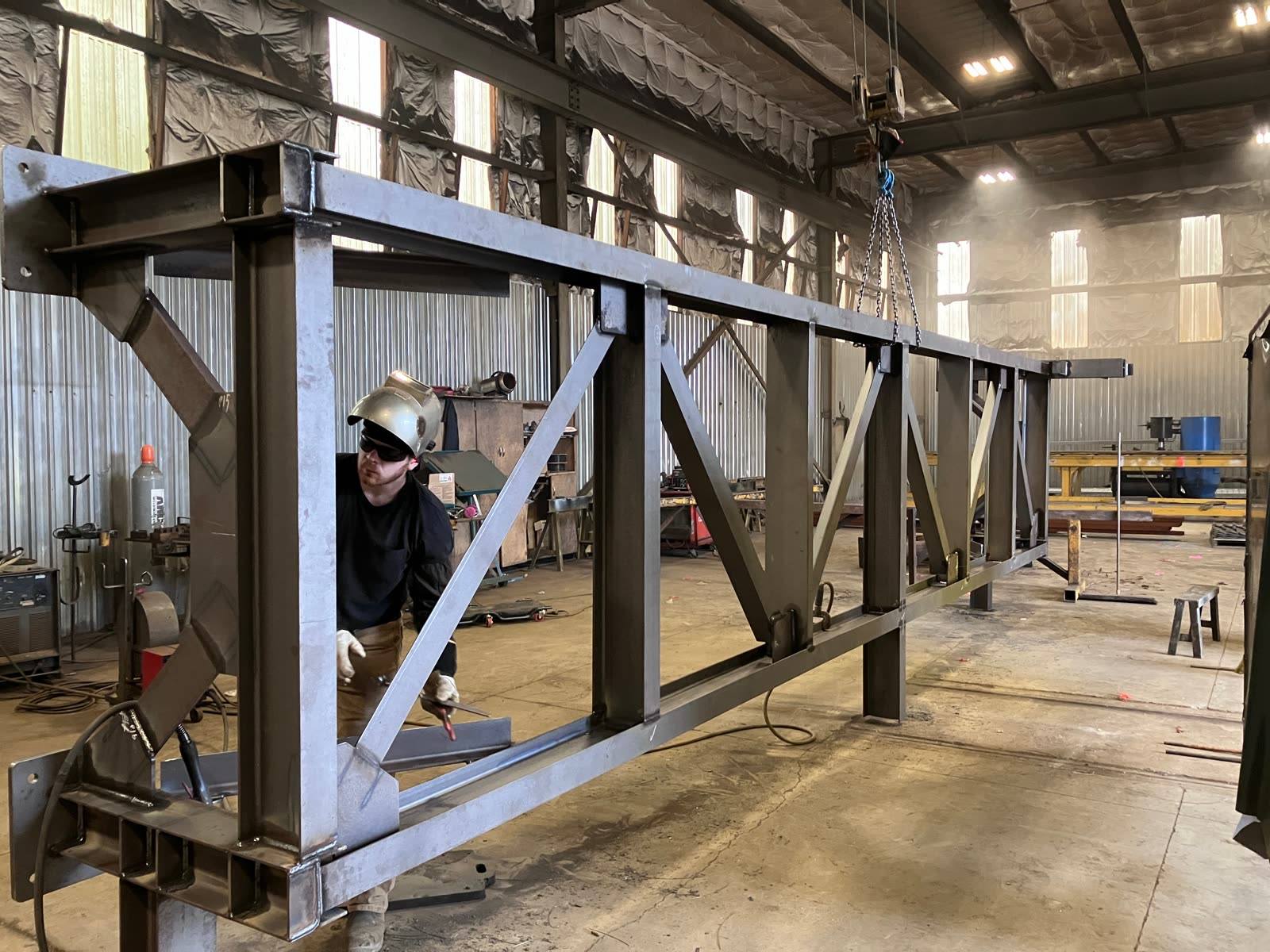
Forge runs a steel fab shop the way the shop actually runs. The takeoff comes off the detailing sheets with every weight verified, the nest tells the saw what to pull and from which rack, every mark scans through its stations, and the CWB records write themselves while the shop works.
Built and run inside a working CWB-certified fabricator. The features below aren't a roadmap; they're in use.
Forge reads the material lists straight off Tekla and SDS/2 detailing PDFs — the real text layer, not a blurry scan of it — and falls back to AI vision only for the sheets that need it. Then it checks the work: every weight is re-derived from the shape designation against the official AISC database. A W12x26 prices at 26 lb/ft because that's what a W12x26 weighs, not because a model felt confident.
Import the job from your detailer — DSTV .nc1, KISS .kss, or a plain Excel BOM — and every mark gets a route through your stations. From there the shop runs itself on scans.
Heat to bar, bar to mark, mark to weld, weld to load. When the client asks where a beam came from, the answer is a click, not an afternoon in the file room.
Every weld logged at the station lands as a structured record: welder, process, WPS, date, result. When the CWB auditor or the client's QA shows up, the records already exist — consistent, complete, and exportable as one package.
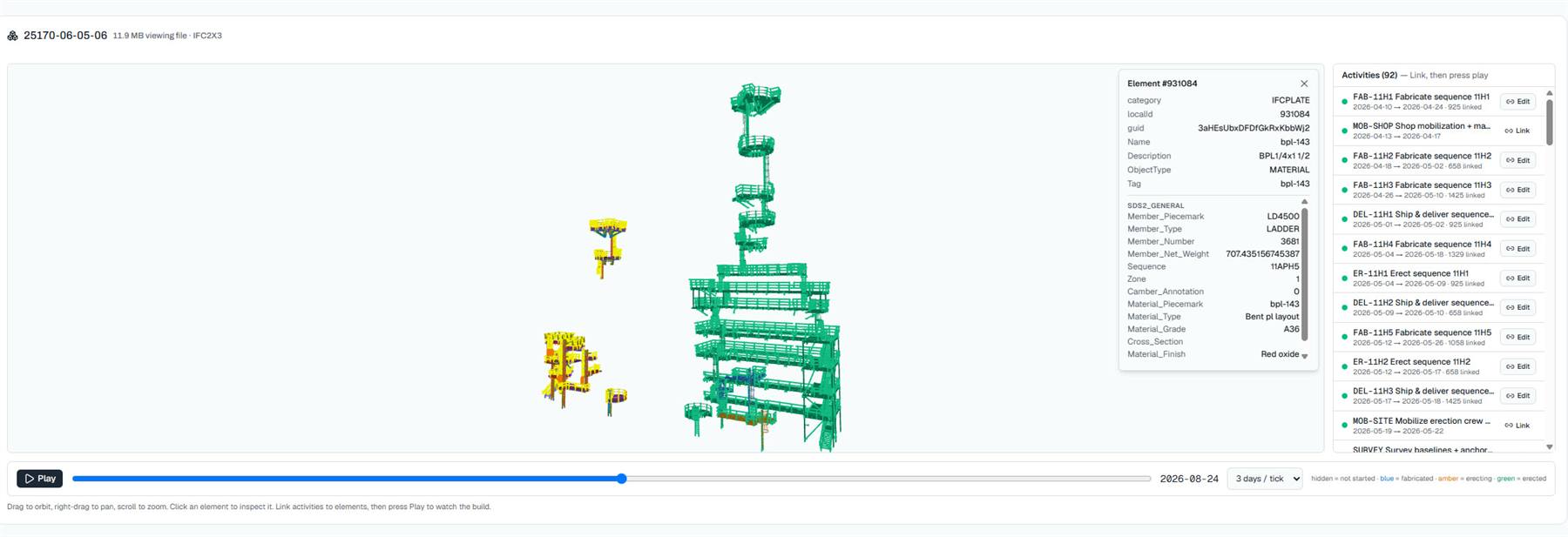
Load the IFC — or translate Navisworks and Revit files in — and see the job coloured by live status: fabricated marks in blue, shipped in green. Scrub the 4D timeline against the schedule, straight from a P6 .xer import.
Bring a real bid package and a real sequence. Watch the takeoff verify itself, the nest pull from your racks, and the records assemble while the shop works.
You'll talk to a contractor, not a sales rep. Built by contractors, for contractors.
Enter your email — a personal email is fine — and we'll take you to your workspace.
A short note — you'll hear back from a contractor, not a sales queue.